

I remember sitting in a meeting, my hand creeping toward my mouth without me even noticing. I had been biting my nails for as long as I could remember, and it felt as automatic as breathing. I didn’t even realize I was doing it until a colleague gently pointed it out. That moment was the beginning of my journey to understand and break a habit that had controlled me for over twenty years.
Nail biting is one of the most common body-focused repetitive behaviours, affecting people of all ages. It is often dismissed as a harmless quirk, but for many, it can be a source of embarrassment, pain, and even health issues. Here is everything I have learned about why we bite our nails, how to stop, and what to expect during the recovery process.
Why Do We Bite Our Nails?
Nail biting is rarely about the nails themselves. It is almost always a response to an underlying emotional or psychological state. For most people, it is a coping mechanism—a way to manage uncomfortable feelings or situations. Stress and anxiety are major triggers; the repetitive motion of biting can be a way to release nervous energy or provide a distraction from anxious thoughts. Boredom and inactivity are also common triggers; when the mind is under-stimulated, the body may seek out sensory input, and nail biting provides that stimulation. For others, it can be a form of stimming used to help maintain focus or release excess energy, particularly in people with ADHD. Perfectionism can also play a role—some people bite their nails as a way to “fix” an imperfection, like a rough edge or a hangnail, but this often makes the problem worse.
There is also a genetic component. Studies show that up to 63% of children who bite their nails have at least one other family member who does the same. This suggests that nail biting may have a hereditary predisposition, though the behaviour itself is often triggered by environmental factors.
When Does Nail Biting Typically Start?
Nail biting usually begins in childhood, most commonly between the ages of 4 and 6, when children are developing fine motor skills and exploring their environment. It often peaks during adolescence, a time of significant stress and hormonal changes. Many people continue the habit into adulthood, and for some, it becomes a lifelong behaviour. In fact, an estimated 20-30% of the general population bites their nails to some extent, with the habit being most common in children and adolescents.

Is Nail Biting a Serious Problem?
For most people, nail biting is a harmless habit that causes cosmetic issues—ragged nails, sore cuticles, and embarrassment. However, in some cases, it can lead to more serious health issues. The most immediate risk is infection. The mouth contains a diverse range of bacteria, and introducing these bacteria into broken skin around the nails can lead to paronychia, an infection of the nail fold that causes redness, swelling, and pain. Nail biters are also more prone to colds and flu, as bacteria from your fingers regularly end up in your mouth. Chronic biting can cause permanent damage to the nail matrix, leading to distorted or irregular nail growth. It can also lead to dental problems, including chipped teeth, misalignment, and gum damage. Furthermore, persistent nail biting can result in scarring and permanent changes to the nail bed.
If you notice signs of infection—redness, swelling, warmth, or discharge—it is time to take the habit more seriously and seek help.
How to Effectively Stop Biting Your Nails?
Breaking a habit you have had for years is not easy, but it is absolutely possible. The key is a combination of awareness, physical barriers, and replacement behaviours.
Identify your triggers. The first step is understanding when and why you bite. Keep a log for a week. Every time you catch yourself biting, note what you were doing and how you were feeling. Were you stressed? Bored? Concentrating? Once you know your triggers, you can develop targeted strategies to address them.
Start with physical barriers. If you cannot reach your nails, you cannot bite them. Keep your nails trimmed short and smooth—if your teeth cannot grab onto a nail, biting becomes less satisfying. Apply a bitter-tasting nail polish formulated specifically to stop nail biting. The awful taste serves as an instant reminder every time you start to bite. Wearing gloves, adhesive bandages, or even artificial nails can also create a physical barrier while your nails heal and grow out.
Replace the habit. When you feel the urge to bite, do something else with your hands or mouth. Clench your fist, squeeze a stress ball, or pick up a fidget toy. Chew gum or suck on a mint to keep your mouth busy. Keeping your hands busy with doodling, knitting, or using textured objects can satisfy the need for sensory input without damaging your nails.
Use habit reversal training. For those who need extra help, habit reversal training is the gold-standard behavioural therapy. It involves becoming more aware of your behaviour, learning to recognise triggers, and practicing competing responses to replace biting. A therapist can guide you through this process.
How Mini Sanding Bands Can Help?
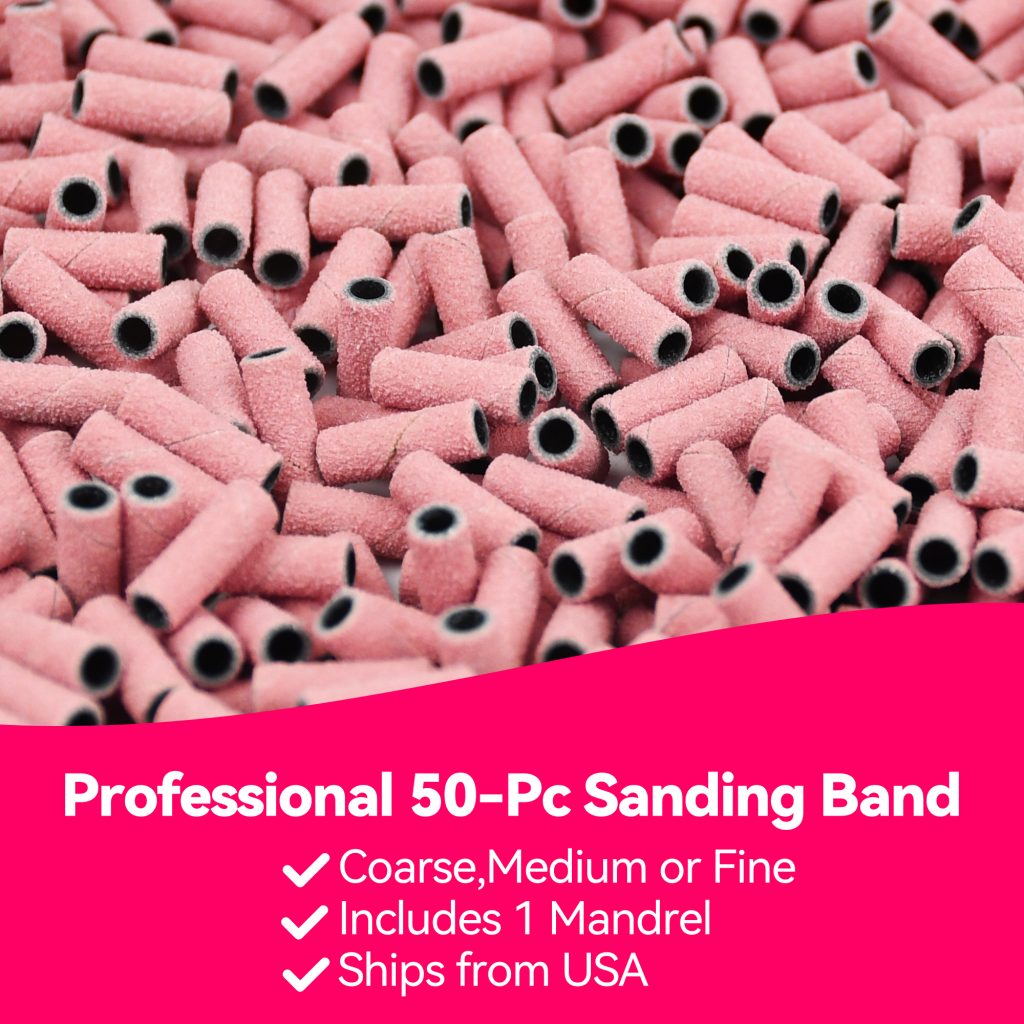
One of the most effective physical barriers is a fine-grit mini sanding band on an e-file. Instead of biting rough edges, which often triggers more biting, you can gently smooth the nail edge. This addresses the perfectionist trigger—the desire to “fix” an imperfection—without causing damage. By smoothing rather than biting, you break the cycle and protect the nail from further trauma.
Does Bitter-Tasting Nail Polish Actually Work?
Yes, bitter-tasting nail polish is one of the most effective tools for breaking the habit. The unpleasant taste creates a negative association with the behaviour. Each time you bring your hand to your mouth, you are met with a bitter reminder. Over time, this reduces the urge to bite. It is particularly effective when combined with other strategies.
How Long Does It Take for Nails to Grow Back After Biting?
Nails grow at an average rate of about 3 millimeters per month. After stopping, it takes about one to two months to see noticeable growth, but a full replacement of the nail plate can take four to six months. Toenails take even longer, up to twelve months. In the meantime, keep your nails moisturized with cuticle oil, protect them from trauma, and be patient. The first few weeks are the hardest, but the rewards are worth it.
The Bottom Line
Nail biting is a common habit, but it is not one you have to live with forever. With awareness, physical barriers, and a little patience, you can break the cycle. Identify your triggers, replace the habit with a healthier alternative, and use tools like bitter-tasting polish and nail files to help you along the way. It takes time, but the result—healthy, beautiful nails—is well worth the effort.
Read also: How to Remove Nail Polish Without Damaging Your Nails: A Complete Guide